Singapore eSIM Guide 2026: Best Plans, Coverage, and Setup Tips for Travelers
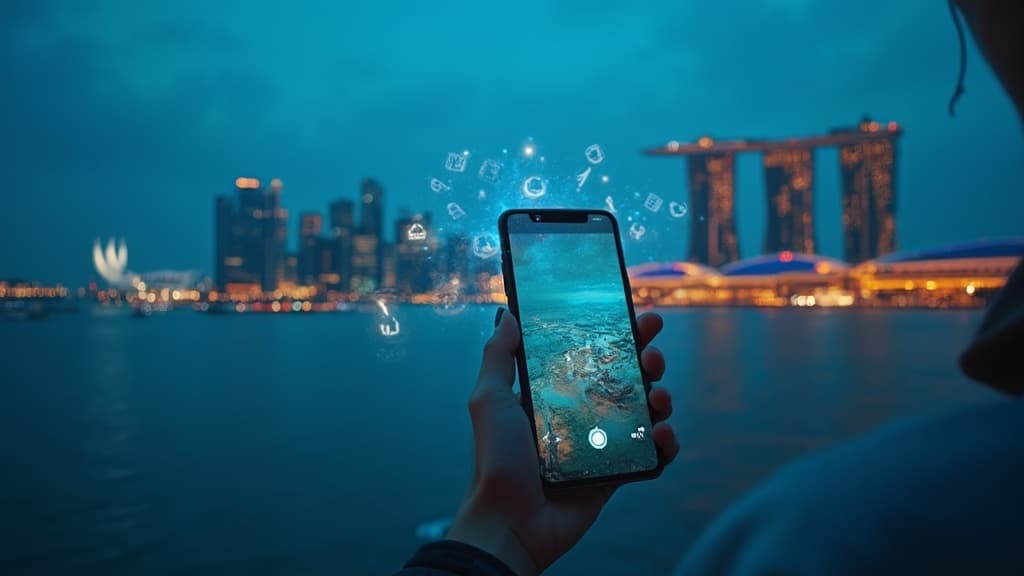
Why Use an eSIM in Singapore?
Singapore is one of the easiest places in the world to stay connected, but that does not mean you should rely on expensive roaming. The city-state is compact, hyper-digital, and built around mobile convenience. You will use your phone for everything: MRT navigation, Grab rides, hawker center recommendations, attraction bookings, mobile payments, messaging, and remote work.
An eSIM lets you land at Changi Airport with data already active. No hunting for SIM kiosks, no fumbling with plastic cards, and no surprise charges from your home carrier. If your phone supports eSIM, this is easily the cleanest way to get online in Singapore in 2026.
It is especially useful if you are combining Singapore with other stops in Southeast Asia. Many regional eSIM plans let you keep one setup across multiple countries, which is a lifesaver for short city breaks, business trips, and digital nomad routes through Bangkok, Bali, Kuala Lumpur, and Ho Chi Minh City.
How Good Is Mobile Coverage in Singapore?
Honestly, coverage in Singapore is absurdly good. This is one of the most connected countries on the planet. You can expect strong 4G and widespread 5G performance in nearly all visitor-heavy areas, including:
- Changi Airport
- Marina Bay
- Orchard Road
- Sentosa
- Little India
- Chinatown
- Bugis
- Jurong East
- MRT stations and underground interchange hubs
The major local networks are Singtel, StarHub, and M1. Most travel eSIM providers partner with one of these carriers. In practice, travelers usually get excellent speeds for maps, social apps, tethering, video calls, and cloud work. Unless you are deep inside a concrete basement or an overloaded event venue, connectivity is rarely a problem.
Best eSIM Plan Types for Singapore
The best Singapore eSIM depends on how long you are staying and how heavily you use data.
For a Short Stopover or Weekend Trip
If you are in Singapore for 1 to 3 days, you probably do not need a massive plan. A 1 GB to 3 GB package is enough for navigation, WhatsApp, booking apps, and basic browsing if you also use hotel or cafe Wi-Fi.
- Best for: stopovers, city breaks, cruise passengers, conference visitors
- Recommended size: 1 GB to 3 GB
- Typical use: MRT directions, Grab, restaurant search, messaging, boarding passes
For a One-Week Vacation
A 5 GB to 10 GB eSIM is the sweet spot for most tourists. That gives you enough room for constant Google Maps use, social uploads from Marina Bay Sands, travel research, and occasional video streaming while you cool off in the hotel.
- Best for: leisure travelers, couples, solo travelers
- Recommended size: 5 GB to 10 GB
- Typical use: navigation, Instagram, YouTube, ride-hailing, translation, hotspot in a pinch
For Business Travelers and Digital Nomads
If you will be taking Zoom calls, tethering a laptop, uploading files, or working from coworking spaces, go bigger. Singapore has fantastic infrastructure, so your bottleneck will usually be plan size, not network quality.
- Best for: remote workers, founders, consultants, long-stay visitors
- Recommended size: 10 GB to 20 GB for a week, 20 GB+ for longer stays
- Typical use: tethering, Slack, video calls, cloud docs, frequent hotspot sessions
Singapore eSIM vs International Roaming
Roaming is convenient right up until you see the bill. Many home carriers still charge painful daily rates or cap your high-speed data aggressively. In Singapore, where you are likely to be online constantly, that gets expensive fast.
A travel eSIM usually wins on three fronts:
- Lower cost: you pay for the trip, not your carrier's markup
- Instant setup: scan a QR code and activate in minutes
- Flexible coverage: choose Singapore-only or Asia regional packages
If your primary number needs to stay active for calls or banking codes, use dual SIM mode. Keep your physical SIM or primary eSIM for your regular number, and assign mobile data to the Singapore travel eSIM. That setup works beautifully for most modern iPhones, Google Pixel devices, and newer Samsung phones.
How Much Data Do You Actually Need in Singapore?
Singapore looks small on the map, but travelers burn through data quickly here because the entire experience is app-driven. Here is a realistic guide:
- 1 GB to 3 GB: light use, short trips, mostly messaging and maps
- 5 GB: most tourists for 4 to 7 days
- 10 GB: heavy social sharing, lots of navigation, some streaming
- 20 GB+: tethering, remote work, hotspot, extended stay
If you are not sure, buy a bit more than you think you need. Singapore is not the place where you want to ration data while trying to find a hidden speakeasy, a coworking spot, or the right MRT exit.
How to Set Up a Singapore eSIM
Before You Fly
- Check that your phone is eSIM compatible and carrier unlocked.
- Buy a Singapore or Asia regional eSIM from a trusted provider.
- Save the QR code or manual activation details somewhere accessible.
- Install the eSIM before departure if your provider allows it, but only enable it when needed.
When You Land
- Open Settings on your phone.
- Select Cellular or Mobile Data.
- Tap Add eSIM or Add Cellular Plan.
- Scan the QR code provided by your eSIM seller.
- Name the line something simple like Singapore eSIM.
- Set that line as your mobile data SIM.
- Turn on data roaming for the travel eSIM if your provider requires it.
Then test it with Google Maps or a browser. If it does not connect immediately, toggle airplane mode for 10 to 20 seconds and retry.
Practical Tips for Tourists
- Activate before arrival: It is much nicer to step into Changi with instant data than to sort it out after immigration.
- Use airport Wi-Fi as backup: Changi has excellent Wi-Fi if you need to troubleshoot activation.
- Prefer regional plans if continuing onward: If Singapore is just one leg of your trip, an Asia plan can save money and hassle.
- Watch hotspot use: Tethering a laptop during work sessions can eat data surprisingly fast.
- Keep your home SIM on for OTPs only if needed: Just disable data on it to avoid accidental roaming charges.
Best Use Cases for a Singapore eSIM
Tourists
You will use maps constantly, especially when moving between neighborhoods like Tiong Bahru, Kampong Glam, Chinatown, and Orchard. A travel eSIM makes that frictionless.
Business Travelers
Singapore is a major business hub, and reliable data matters. An eSIM gives you immediate connectivity for airport transfers, client meetings, WhatsApp, and tethering between venues.
Digital Nomads
Even if Singapore is not your cheapest long-stay base in Southeast Asia, it is a superb short-term work stop. Cafes, coworking spaces, and public infrastructure are all strong, and mobile backup is excellent when Wi-Fi disappoints.
Should You Buy a Singapore-Only or Regional Asia eSIM?
If Singapore is your only destination, a local or Singapore-specific eSIM is usually the best value. But if you are doing a broader Asia trip, a regional package can be smarter.
Choose a Singapore-only eSIM if:
- You want the cheapest option for a short stay
- You care most about maximum local performance
- Your trip begins and ends in Singapore
Choose an Asia regional eSIM if:
- You are also visiting Malaysia, Thailand, Indonesia, Vietnam, Japan, or korea" class="text-blue-600 hover:text-blue-800 underline decoration-blue-300 hover:decoration-blue-500 transition-colors" title="eSIM for South Korea">South Korea
- You want one setup across multiple countries
- You do not want to reinstall a new plan at every border
Common eSIM Problems in Singapore
Singapore itself is rarely the issue. If your eSIM is not working, the cause is usually one of these:
- The phone is carrier locked
- The eSIM was installed but not selected for data
- Data roaming is off on the travel eSIM
- The QR code was scanned on unstable Wi-Fi and setup failed halfway
- The plan expired before activation or has not started yet
Fixes are usually simple: restart the phone, reselect the eSIM as the data line, toggle roaming, and check the activation window in your provider email.
Final Thoughts
A Singapore eSIM is a boringly smart purchase, which is exactly what you want. It is fast to set up, usually much cheaper than roaming, and perfectly suited to a city that expects you to do everything from your phone.
For most travelers, a 5 GB to 10 GB plan is plenty. If you are working remotely or using hotspot heavily, aim higher. And if Singapore is part of a wider Asia itinerary, consider a multi-country eSIM so you stay connected without thinking about it again.
The whole point is simple: land, connect, and get on with the fun part.
Related Articles
Southeast Asia eSIM Guide
Discover how to stay connected across Southeast Asia with the best eSIM options for travelers and digital nomads.
eSIM vs Physical SIM: Complete Comparison
As travelers increasingly seek seamless connectivity solutions, the debate between eSIM technology and traditional physical SIM cards has become more relevant than ever. This comprehensive comparison covers compatibility, cost, convenience, security, and travel-specific considerations to help you choose the best option for your needs.

How to Use Your Travel eSIM as a Hotspot in 2026: A Practical Guide for Travelers and Digital Nomads
Can you use a travel eSIM as a hotspot? This 2026 guide explains tethering, setup, data usage, and practical hotspot tips for travelers and digital nomads.